

2026 Hillman Prize for Newspaper Journalism
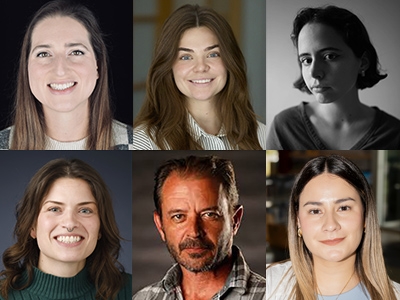
Lauren Caruba, Marin Wolf, Azul Sordo, Emily Brindley, Michael Hogue and Maria Ramos Pacheco
Women forced to carry a pregnancy to term, even though their babies were not viable. A woman in her second trimester who endured four days of excruciating labor for a stillborn delivery. Two women who died while waiting for medical treatment for their pregnancy losses.
These are just some of the stories featured in “Standard of Fear,” an eight-part investigative series in The Dallas Morning News. The reporting team led by Lauren Caruba—who was pregnant with her first child—exposed the impact of state laws on women’s health and mortality, as well as on the physicians who were forced to follow them.
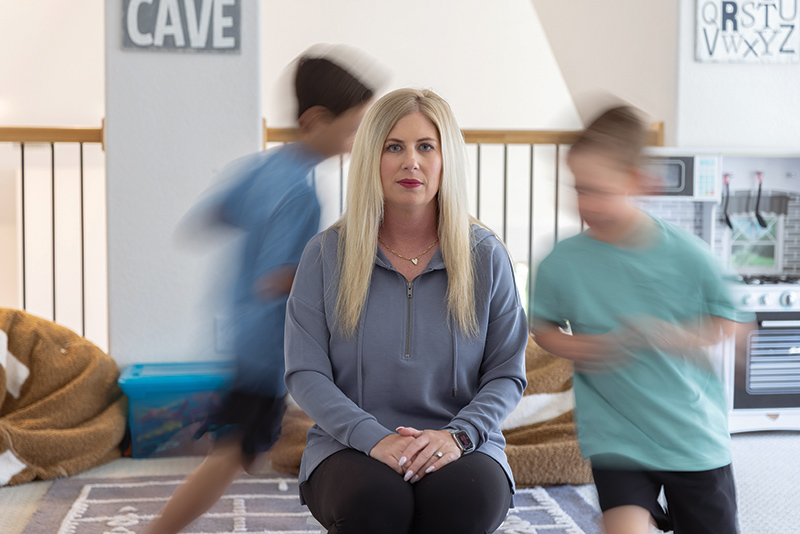
Texas is one of the most challenging states in the country to deal with a difficult pregnancy. Months before June 2022, when the U.S. Supreme Court overturned the constitutional right to abortion, Texas lawmakers instituted a punitive abortion ban, prohibiting the procedure after the detection of fetal heart activity, typically around six weeks of pregnancy. There are no exceptions for rape, incest, or fetal anomalies.
Over the next year and a half, Caruba and reporting partner Marin Wolf assembled a comprehensive portrait of the impact on pregnant Texans and the systems responsible for their care. Using autopsy and death records, the reporting team—which also included visual journalist Azul Sordo and reporters Emily Brindley and Maria Ramos Pacheco—built a database of maternal deaths spanning three years. They sought interviews with more than 100 people, including 47 physicians. In consultation with medical experts, they examined more than a dozen patient cases, combing through hundreds of pages of medical records to identify deviations from standards of care.
“Standard of Fear” exposes the systemic harm to patients and the deterioration of maternal health care. With sensitivity and nuance, the reporters told stories that described the sweeping collateral damage of the state’s abortion laws: profound tragedy, impossible decisions, and unintended consequences. They spoke with the families of stillborn babies, and with two young mothers who died after they were unable to access abortion care for their pregnancy losses. In an intimate dual narrative, they wove together the diverging paths of two women whose babies shared the same fatal diagnosis. They identified doctors who stopped delivering babies or left the state altogether, as well as patients who opted to be surgically sterilized rather than risk becoming pregnant in Texas. They revealed lawmakers’ lack of consideration for maternal mental health through one woman’s battle with hyperemesis gravidarum, which causes uncontrollable vomiting. They compiled a moving collection of first-person accounts from doctors, brought to life beautifully by staff artist Michael Hogue.
The consensus among doctors is that in the case of a complex or complicated pregnancy, abortion is a way to deliver health care, but, in Texas, doctors’ hands are tied by state laws, resulting in patient care that is dangerous, unjust or cruel. A medical malpractice attorney described the situation this way: “They have basically legalized malpractice. Or to flip that around: They made the standard of care illegal.” As a result, fewer medical graduates are applying for obstetrics and gynecology residencies in Texas, and some OB-GYNs with specialized abortion training have left the state, further reducing access to care.
“Standard of Fear” reveals the many ways that abortion bans endanger the standard of care for all women. These laws drive doctors out of state, damage the doctor-patient bond, and delay or deny medical treatment.
Lauren Caruba is an investigative reporter with The Dallas Morning News, where she has been a senior staff writer since early 2022. She has been based in Texas for more than a decade, previously reporting for the San Antonio Express-News and the Houston Chronicle. Her 2023 series, “Bleeding Out,” about a national epidemic of potentially preventable bleeding deaths, was recognized by Investigative Reporters and Editors, the Online News Association and the National Association of Science Writers, among others. Her reporting prompted paramedics in Dallas to start carrying blood in the field, an initiative that saved dozens of lives in its first year. Her body of work on the COVID-19 pandemic, which included dozens of hours embedded with frontline health care workers, was recognized by the Headliners Foundation of Texas and Texas Managing Editors. Lauren is a four-time finalist for the Livingston Awards for young journalists. An ardent fan of immersive storytelling, her stories have twice been anthologized in Mayborn and UNT’s Best American Newspaper Narratives series. She is a graduate of Northwestern University.
Marin Wolf covers the business of health care for the Boston Globe. Before her move to Massachusetts, she was a health care reporter at The Dallas Morning News, where she wrote about public health, biotechnology and Texas hospitals. She led the paper’s COVID-19 and reproductive health care coverage. Her work has also appeared in Bloomberg News and publications across North Carolina. She is currently pursuing a master of public health degree from the Harvard Chan School of Public Health. A North Carolina native, she graduated from the University of North Carolina at Chapel Hill Hussman School of Journalism and Media.
Azul Sordo is a video producer for The Dallas Morning News. Previously, she interned at U.S. News and World Report, Texas Tribune and KERA. She started her career primarily as a photographer but found her passion in short-form and documentary filmmaking. Originally from Guadalajara, Mexico, much of her work is informed by her experience as a fi rst-generation immigrant. She frequently works on stories highlighting identity, women’s health and culture.
Emily Brindley is the health reporter at The Dallas Morning News. Her work focuses on the intersection of health and politics, including extensive coverage of abortion, reproductive health and vaccines. Brindley was previously an investigative reporter at the Fort Worth Star-Telegram, where her reporting revealed allegations of abuse at an adolescent treatment center and undisclosed airplane crash zones in a residential area, among other projects. Before moving to Texas in 2021, Emily covered the coronavirus pandemic at the Hartford Courant in Connecticut. Brindley was a recipient of a 2025 JAWS Health Journalism Fellowship for her work on rural Texas’ crumbling maternal care system. She is currently an AHCJ fellow in the U.S. Health System Reporting Fellowship.
Michael Hogue has worked at The Dallas Morning News as a staff artist for more than two decades. He writes and creates informational graphics, illustrations and animations. His work has received hundreds of national and international awards, including from Communication Arts, the Society of Illustrators, the Society of News Design, The Associated Press and the Malofiej Awards.
María Ramos Pacheco is a bilingual reporter who covers neighborhood issues, environmental justice and all things city of Dallas-related for The Dallas Morning News. She is a graduate of the University of Texas at El Paso. In 2021, she participated in NPR’s NextGen project and, in 2020, was part of the ProPublica Emerging Reporters cohort. María was born and raised in Chihuahua, Mexico, where her love for journalism took root.