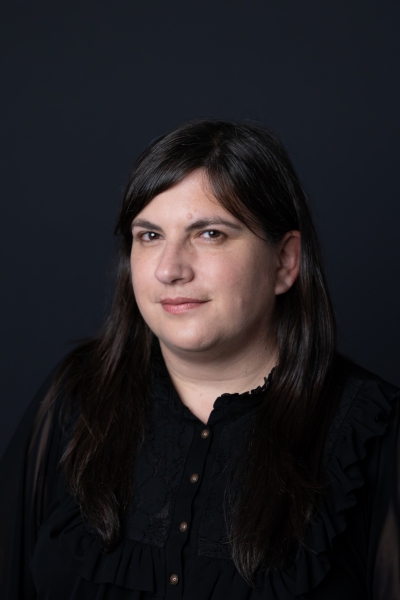
Mica Rosenberg wins March Sidney for Telling the Stories of Kids in ICE Detention
NEW YORK — Mica Rosenberg of ProPublica wins the March Sidney Award for her portrait of the children imprisoned in the Dilley ICE detention center near San Antonio, Texas. Hundreds of children and their families are currently detained there.
Rosenberg asked children to write her letters about their lives behind bars. Children who were too young to write were invited to draw pictures. The children spoke of the boredom, the loneliness, the bad food, the shoddy attempts at schooling, and the infections that circulated in detention. Many expressed fear of returning to countries where they might face violence.
“I have been here too long,” wrote 9-year-old Susej, who was awaiting deportation to Venezuela with her mother.
According to a long-standing legal settlement children can’t be held more than 20 days but they are routinely being held much longer. Some children have been held for up to eight months.
Schooling is limited to one hour a day.
“I have never felt so much fear to go to a place as I feel here,” wrote 14-year-old Ariana, who had been detained for 45 days as she awaited deportation to Honduras after spending half her life in Hicksville, NY.
“I feel so much sadness and depression of not being able to leave, its really sad to hear that peoples cases are being denied and getting send back to their countrys,” wrote 14-year-old Gaby.
“This story features voices that are seldom heard,” said Sidney judge Lindsay Beyerstein. “The letters expose the depravity of Trump’s mass deportation campaign. These children are battling boredom, fear, loneliness, and disease as they await deportation, often to a country they barely remember.”
Mica Rosenberg is a reporter on ProPublica’s national desk focusing on immigration. Her reporting with colleagues on child labor in the U.S. was a finalist for the Pulitzer Prize

Backstory
Q: Tell us about the Dilley facility?
A: The Dilley facility is right now the country’s only ICE detention facility for immigrant families. It’s in South Texas about an hour south of San Antonio. It’s there to hold families - parents with their children primarily. There are kids there ranging in age from brand newborn babies to two months old to older teenagers.
Q: How do families typically end up there?
A: Family detention has been in operation through various administrations. And in the past, facilities like Dilley were primarily for immigrants who had recently crossed the border and were trying to go into the United States for the first time. Often they would be held there until a decision was made about whether they could be released into the US to pursue their court cases or be deported. But what’s happening now is that the number of families crossing the border is at record lows. And so an unprecedented number of families are coming into the detention center from ICE arrests all over the country as the Trump administration ramps up its mass deportation campaign, which means that a lot of the families there have been living in the U.S. for years.
Q: How does incarceration affect these kids physically and mentally?
A: Every kid experiences it differently. But we did speak to a lot of kids who said that they were confused about why they were there, why they had been pulled out of their lives. They were upset at what was happening to their families. They missed their families on the outside and their schools and their friends. There was a lot of uncertainty about what would happen to them next. A lot of them were afraid of being deported and afraid of what might happen to their parents. Experts say even a short amount of detention can have long-term psychological impacts.
Q: What’s life like physically for the kids there? What kind of conditions are they confined under?
A: Well, the kids are usually housed in rooms that can hold up to 12 people. There’s a series of bunk beds so several families are housed together. There’s recreational areas where they can play sports and games. But a lot of kids said that there really wasn’t very much to do. There’s school, but they told me it was only for an hour a day, and it’s limited to just 12 kids per class. Those classes are for mixed ages and they described the classes as consisting of handouts and things that weren’t very challenging. So there’s a lot of boredom. Because of the sheer number of kids who are being held there, there’s a lot of sicknesses that are being passed around. They described colds and rashes and more serious cases; there were two measles infections for example, and other kids who ended up having to go to the hospital for various infections.
Q: Can you give us an overview of your approach to reporting this story?
A: We set out to hear the experience of what was happening inside Dilley from the perspective of the children, which are voices that you often don’t hear. As part of that, I was able to meet with some families in person and talk to the kids directly. I also asked if any of them would feel comfortable writing letters about their experience, or if they were too young to write, if they wanted to draw what they were going through. And so we were able to get our hands on those and publish what the kids said.
Q: What themes emerged?
A: They were worried for their families. They missed their schools, their friends, their life on the outside. They talked about people being sick constantly and being bored of the food and not being able to really continue with their schooling. And a lot of the kids who drew pictures of what they were feeling, they drew families with sad faces crying and that ran through a lot of the letters that we read.
Q: Did you get to visit the facility?
A: Yes, I was able to go there in January. I just went as a visitor after speaking with several detainees who said that they were open to having me meet with them. I had asked officially for ICE to facilitate a visit. I got mixed messages. One spokesman said they couldn’t facilitate a visit, but another said that if detainees were open to having me come as a visitor I could, so I just decided to go.
Q: What was it like to go into that facility?
A: Well, I didn’t get past the visiting room, it definitely feels like a secure place. You have to go through a security check in the front and check all of your belongings. I was escorted into the visiting room by a guard and they would have to go and find the detainees to come and talk with me. In some ways the place does feel a little bit in the middle of nowhere. Dilley is a very small town and if you count up all the detainees who have moved through the center just since it reopened it’s more than the population of the town itself. I met people there from all over the country - from New York, California, Minneapolis - for a lot of them it’s very far from home.
Q: Can you tell us how a planned 10-day vacation to Disney World turned into a 100-day detention at Dilley for one family?
A: Yes, that was an unusual and shocking case. I met Maria and her mother after corresponding with them and speaking with them on the phone. Maria was living in New York. She had overstayed her visa but was married to a US citizen and was in the process of applying for a green card. Her nine-year-old daughter was actually living with her grandmother while her mom went through the immigration process to get her green card. But she would travel back and forth regularly to the United States. She had a valid tourist visa and they always made plans to see each other and they’d actually gone to Disney World over the summer. Her daughter, who is also named Maria, was so excited by the trip that she wanted to go back for an annual Halloween parade that Disney does.
So they made the plan. She had her 101 Dalmatian Halloween costume in her suitcase all ready to go. But when she arrived at the airport and her mother came to pick her up, they were both detained in the Miami airport. Her daughter, who’s nine, said that she was actually interrogated by herself about her mom’s immigration case. She said, I’m nine, I don’t know any details about this. But eventually they were both taken together to Dilley and by the time I met them they had been there for four months.
Q: What impact has the story had since it’s been published?
A: I think the story came out at a time when public attention was ramping up about what was happening at Dilley. I had been talking to families there since late last year, but during the course of my reporting, there was a little boy, a five-year-old in Minnesota named Liam Conejo Ramos, who was arrested and his photo went viral on the internet wearing a little blue bunny hat.
That created a lot of public outrage. There were lawmakers who went to go visit the center after that. And the detainees themselves launched a protest in the yard that was photographed from above. So by the time I published the story that I had been working on for the previous weeks, it came right at that moment. And I think a lot of people were impacted by reading the text and the drawings in the letters, which ended up being read in Congress. We heard about people printing them out and putting them on protest signs. Then subsequently, we actually got more letters, more than three dozen in total from detainees inside.
Q: Is there one letter in particular that sticks with you?
A: One thing about these letters that’s really impactful is that to see them in the kids own handwriting with all of the spelling mistakes and little drawings and different colors really makes what they’re saying even more moving. One letter that comes to mind is from a girl named Susej Fernandez, who’s nine years old, from Venezuela. I actually ended up speaking to her and her mother via video call as well. She wrote that she knows that she has to go to Venezuela. But she said, my mom and I do not want to leave because she wants a better future for me.
Q: Have you heard any updates from the kids or the families that you’ve been in touch with?
A: Yes, I have. Some of them have been released back into the US. For those that have been released, some of them have been released with ankle monitors where they have to continually check in with ICE. Others, like Maria and her mother, have been deported.
Q: Anything else you’d like to add?
A: We did a follow up story because after we published these letters and our story, which included recordings of video calls with the families, we heard from families who said that they thought that there had been a stepped-up monitoring of their communications and that their rooms had been searched and that things had been seized like their drawings and their colored pencils and their artwork and they felt that guards were closely monitoring their communications. ICE and CoreCivic, the company that runs the facility, says that they haven’t destroyed any children’s artwork. But they do say that they have to search rooms for contraband.
Q: So it’s possible they have a giant pile of children’s drawings in an office somewhere?
A: The company says that they proudly display the artwork all over the facility and that they haven’t destroyed it or confiscated it. But we did hear stories of some things being taken away.