Capital & Main wins December Sidney for Exposing Child Labor Abuses on California Farms
NEW YORK — Robert J. Lopez, Barbara Davidson, and Lorena Iñiguez Elebee win the December Sidney Award for their two-part series exposing child labor abuses on California farms, produced in partnership with Capital & Main, the Los Angeles Times and the McGraw Center for Business Journalism at the City University of New York’s Craig Newmark Graduate School of Journalism.
Experts estimate that between five and ten thousand minors work in California’s fields. Children as young as twelve can legally work up to forty hours a week in agriculture when school is not in session and on weekends. But several of the youth interviewed started working in the fields in their early teens and one started at the age of six. None of the youths were aware that they needed work permits. Many described feeling sick after being exposed to pesticides.
One young woman named Araceli recalled working in a freshly sprayed vegetable field at the age of 13. “Sometimes, it would be really, really pungent,” she said, adding that she’d get headaches and feel like throwing up. Sometimes the skin peeled off her fingers and they turned white.
Regulators failed to investigate a majority of the 2,600 complaints filed against agricultural employers for alleged violations of the state’s outdoor heat law. Repeat offenders were not fined despite hundreds of violations of pesticide safety laws. State officials issued just 27 citations for child labor violations over an eight-year period, and more than 90% of fines were never collected.
“These reporters uncovered a regulatory system in disarray,” said Sidney judge Lindsay Beyerstein, “California is failing these young workers.”
Within days of the series being published, state officials announced that they were launching joint task force operations and other efforts to improve enforcement. California lawmakers are also calling on state pesticide regulators to develop educational materials designed for underage farmworkers to inform them of their rights under the law and how to report problems.
Robert J. Lopez is an independent journalist and fellow at the McGraw Center for Business Journalism. He was part of a Los Angeles Times team awarded the 2011 Pulitzer Prize for Public Service and was a Pulitzer Prize finalist in 2023 with several Times colleagues for local reporting.
Barbara Davidson has long focused her photojournalism lens on people attempting to maintain their dignity in the face of uncertainty in conflict zones. She honed her story-telling approach, through multiple assignments over two decades across 58 countries, covering war, humanitarian crisis, and the human condition for the Los Angeles Times, The Dallas Morning News, and The Washington Times. Davidson is a Pulitzer Prize and Emmy award-winning photojournalist and twice named International Photographer of the Year by POYi.
Lorena Iñiguez Elebee is a senior data and graphics journalist at the Los Angeles Times.
Backstory
Q: What sparked your interest in this story?
A: I was interested in general topics involving farmworkers, like the lack of affordable housing or living in substandard housing. Through early conversations with sources, I learned about issues involving underage workers at a national level. I sharpened my focus on minors who labor in California’s agricultural industry. As I learned more, I knew this is what I wanted to write about and that it had potential to be a very important story.
Q: Give us an overview of your investigative strategy?
A: In the case of this investigation, I had never covered the agricultural industry or farmworker conditions. So I researched what journalists had written about underage farmworkers. I also reviewed studies that had been done by academics and agencies such as the National Institute for Occupational Safety and Health. And I talked to labor advocates who work with minors in the fields, including in California.
I decided to focus on California, in part because there had not been any journalism investigations that examined systemic working conditions for minors and assessed how well frontline state agencies charged with enforcing child labor and other workplace laws were doing their jobs. I could also be more effective in holding agencies accountable by concentrating my reporting on a single state. Another key factor in my decision making was that California has the most productive agricultural industry in the U.S. and is one of the largest in the world.
I knew that I needed to interview as many young field workers as possible, as well as review enforcement records for the various state and county agencies that are responsible for regulating child labor, workplace safety and pesticide safety laws. I ended up speaking with 61 young workers and reviewing more than 50,000 state and local records detailing inspections, violations and money collected for civil penalties. I drove nearly 15,500 miles across California for this investigation, which took 25 months to complete.
Q: How is Trump’s immigration crackdown affecting the kids you interviewed and their families?
A: As with other immigrant families across the nation, the raids have created a climate of fear among farmworker families. Nearly all the youths I spoke with were born in the U.S., but their parents are undocumented. The parents also work in agriculture. So the crackdowns have caused additional stress for the children. They worry that their families will be torn apart if immigration authorities swoop down on the fields.
Q: What impact has the story had so far?
A: Within days of my report being published, state officials announced that they were launching joint task force operations and efforts to improve data sharing among enforcement agencies, actions intended to increase the number of inspectors in the field and identify violators for potential investigation. California lawmakers are also calling on state pesticide regulators to develop educational materials designed for underage farmworkers to inform them of their rights under the law and how to report problems.
Q: Did anything unexpected happen while you were reporting this story?
A: The photojournalist who I collaborated with, Barbara Davidson, and I realized in early 2024 that the presidential elections could lead to a new administration and new policies that could affect farmworker families that lack documentation.
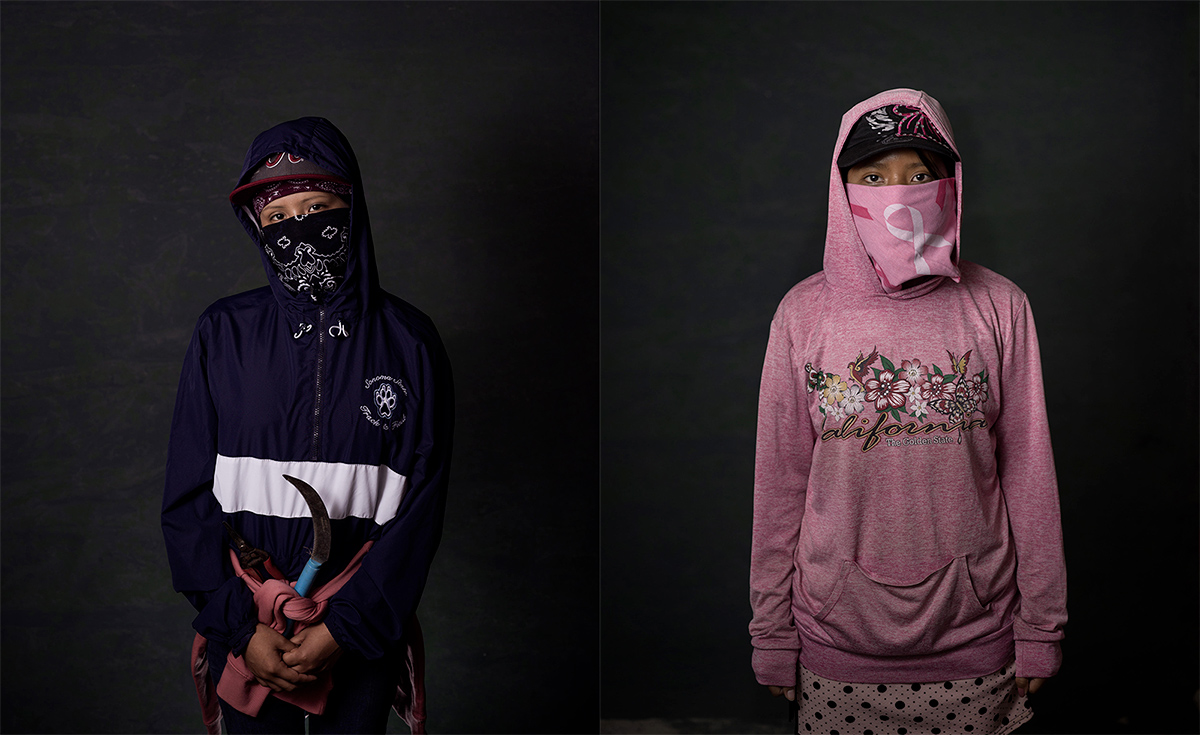
Clearly, we had no idea how the elections would play out or what would happen afterward. But as journalists, we have a responsibility to protect our sources, and we were not about to do anything that would cause problems for the children or their families. So out of an abundance of caution, Barbara came up with the plan to take portraits of the youth in their work clothing, which includes bandanas that obscured their faces. This protected their identities, which was very important because the children are from mixed-immigration status families. As it turned out, we made the right decision.
Q: What did you learn from reporting this story that you will carry forward to your next assignment?
A: This was my first project as an independent reporter, and I learned that there is a big journalism world out there and financial support to do ambitious projects outside the boundaries of legacy media.
Q: If you could make one change to improve the lot of child farmworkers in California, what would it be?
A: Improve working conditions, including safety issues and matters involving fair wages