Rosa Goldensohn of The City Reporter wins July Sidney Award for exposing theft of New Yorkers’ food stamps by organized crime
NEW YORK — Transnational organized crime groups are taking advantage of obsolete technology to steal food stamp benefits from New Yorkers. Rosa Goldensohn of The City Reporter wins the July Sidney for casting a spotlight on the bureaucratic inertia that allows the preventable theft to continue unchecked in New York State.
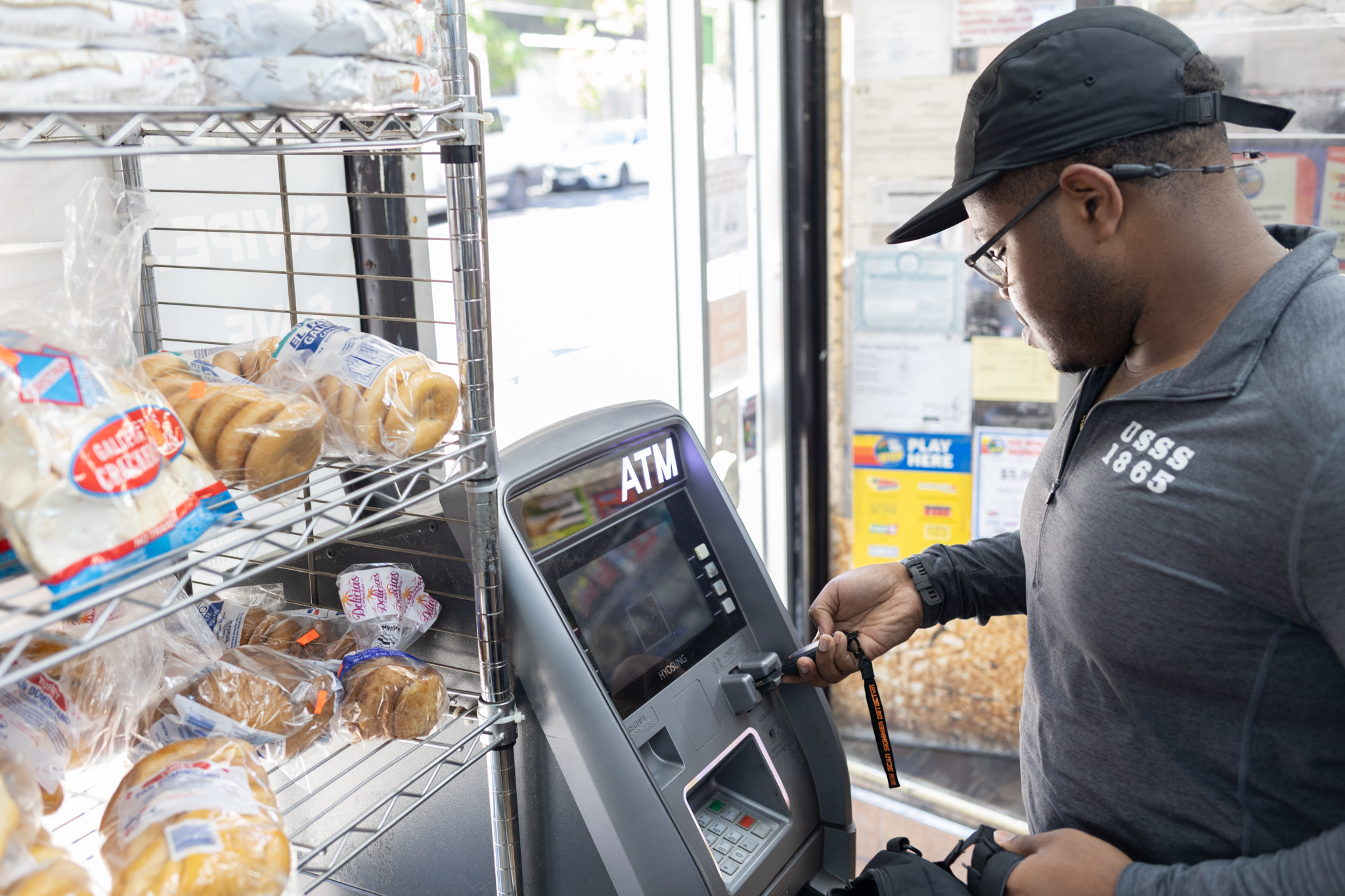
Twenty percent of New York City residents receive Supplemental Nutrition Assistance Program benefits, known as SNAP. They pay for groceries with cards issued by New York State, but these cards lack basic digital security features. According to the Secret Service, European organized crime groups are covertly installing ‘skimming devices’ at grocery stores and other points of sale to steal up to a billion dollars a year from EBT (Electronic Benefits Transfer) cards.
Neither the federal government nor New York State reimburses SNAP beneficiaries for fraudulent charges, so if their benefits are stolen, many New Yorkers must turn to food pantries, or go hungry. Nicholas, 31, from Queens said he did not eat for a day or two after his month’s benefits were taken. “Just drink water,” he told himself. “Water is good.”
“We are bombarded by anecdotes about food stamp beneficiaries supposedly stealing from the government, but Goldensohn shines a light on the huge and preventable theft of benefits from needy people,” said Sidney judge Lindsay Beyerstein, “New York State could solve this problem by putting chips in EBT cards, as California has done.”
Rosa Goldensohn is a contributing writer at The City Reporter in New York. Her work has appeared in The New York Times, Politico, and elsewhere.
Backstory
Q: How did you find out that organized crime groups were stealing food stamp benefits from New Yorkers on an industrial scale?
A: I found out this was going on because it happened to one of my friends. I knew the date that her SNAP benefits were expected to drop in May because it was so important and I knew she was waiting on them to feed her kids. She has two kids and the benefits came in, but then I checked in with her a few days later and she said, ‘Well, I used my EBT card once to buy a sandwich and then the next day they were all gone.’ I was shocked and I wanted to figure out how many people this was happening to and why this was happening.
Q: How did the theft affect your friend and her children?
A: It’s not just her. Thousands of people across the city are struggling to manage when they show up at the grocery store, they’re at the cash register, they’re at the conveyor belt, they’ve just picked up their groceries and they’re shocked when they swipe their card and there’s nothing on it. People think they can get reimbursed, which did happen for a couple of years, but it’s not happening anymore. The federal government isn’t paying people back, and the state and the city aren’t stepping up. So there’s nothing for them. I talked to somebody who said, “You know, I just didn’t eat for a few days. I drank water.”
Q: Who is behind these thefts?
A: According to the Secret Service, which covers counterfeit crimes, these kinds of thefts are organized crime. They’re not so much one-offs. The people that get this information get it in a pretty sophisticated way. They use devices called skimmers, which look exactly like the overlay on a little point of sale terminal that you use with your credit card. They’re identical. Somebody has to figure out an identical cover or overlay or gadget that fits inside it, then quickly insert or apply those things with glue.
The people who own the stores don’t necessarily know about it. These devices are gathering reams of data from everyone who comes and swipes at that store. Then that data, those swipes, are sending card numbers and pin numbers into that little device, which can then broadcast it wirelessly to someone who picks it up, or they come pick it up themselves.
Then that data is used to make new cards or, in other sophisticated online ways, to take this money up the chain to what are, ultimately, according to the Secret Service, transnational crime bosses originating out of Eastern Europe. The money stolen is about a billion dollars nationally, according to the Secret Service. It’s mostly going to a couple hundred of the top people in these groups.
Q: Who’s responsible for preventing this theft?
A: The interesting thing about this kind of crime is that even though it seems to be very hard to track or prosecute, it’s utterly preventable. In fact, this kind of electronic credit card fraud is prevented all the time on cards that are not EBT cards.
EBT cards look like gift cards. They have just a simple magnetic stripe. They don’t have a chip. You can’t tap them, at least in New York. In California you can, but in New York you can’t. I think six states are on their way, and New York has just decided they’re going to move to chip cards, but that’s going to take a year and a half, possibly longer, according to testimony that the state commissioner gave in February.
With a secure card like credit and debit cards, they send you a message immediately when you have suspicious purchases. With EBT fraud, you’ll see in the middle of the night back-to-back purchases over the course of just a few minutes all over the state, sometimes out of state as well, totally strange suspicious patterns that algorithms flag. We have the technology now to flag these kinds of strange purchases but that technology is just not applied to the public benefit system. It’s operating in this very old, archaic technological way.
Q: Other states have solved the problem, right?
A: California has significantly reduced reported theft and it also reimburses when you do lose your benefits. They’ve implemented chip cards already. They have other kinds of fraud detection that the social services department has developed that can flag suspicious purchases and force people to reset their PIN numbers when it looks like their card has been compromised. Fraud has been reduced by 76% in California. Whereas New York does not even have numbers on this anymore because we don’t reimburse people. There’s no reason to think that the problem has reduced or abated in any way. On the contrary, I heard from service providers that it seems like it’s worse than ever.
Q: Is there any political pressure being put on the government of New York right now to change this?
I did just hear from a few lawmakers who wrote to the city saying, What can we do now? Can you do anything about this, you know, apropos of our reporting. There has been a big push at the state level from state lawmakers to try to get reimbursements for people, to try to get these benefits replaced and try to move to chip cards but it’s going to take a long time to get this done.
This is a problem that really hits poor people. Working people. Twenty percent of the city is on SNAP, half a million children. But there’s no lobbying force behind the people who are getting their SNAP benefits stolen.