New York Times wins April Sidney for Exposing Cesar Chavez’s Abuse of Women and Girls
NEW YORK — The New York Times wins the April Sidney Award for an investigation that exposed United Farm Workers leader Cesar Chavez’s history of abusing women and girls.
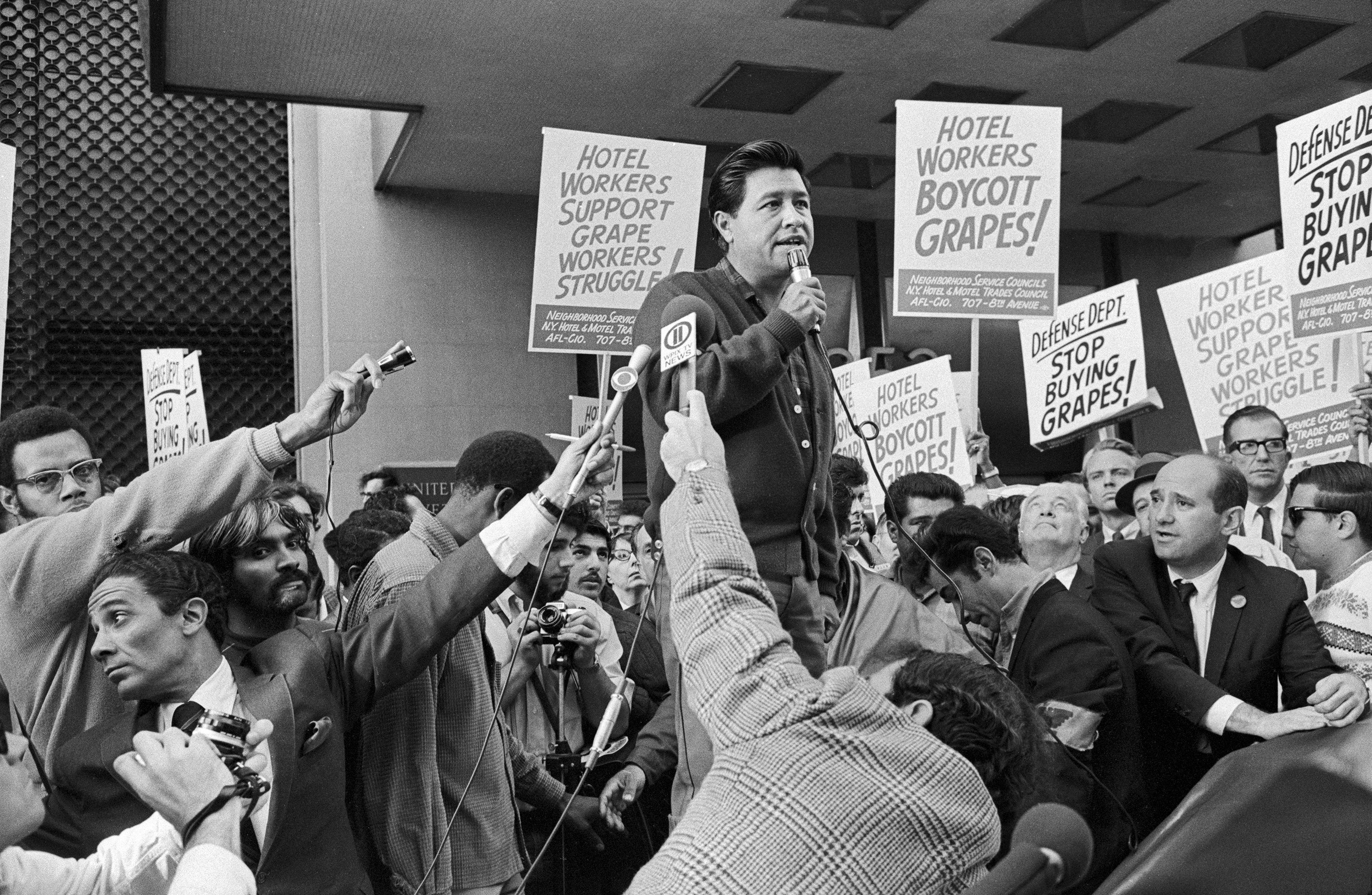
In the 1960s, Chavez organized a series of strikes, marches and boycotts that made him a hero to poor farm workers and an icon of rising Latino political power. Behind the scenes, however, Chavez was preying on his most loyal confidantes. Dolores Huerta, a co-founder of the UFW, and icon of the U.S labor movement herself, said that Chavez pressured her into sex in 1960 and raped her in 1966. Huerta, now 95 years old, said Chavez fostered a culture of misogyny within the UFW. She said, “I never talked about it to anybody and the reason I didn’t is because I just didn’t want to hurt the movement.”
Ana Murguia, the daughter of one of Chavez’s most trusted organizers, was 13 years old when Chavez summoned her to his office and began sexually abusing her in the early seventies. Debra Rojas, the daughter of another trusted organizer, was 12 when the abuse began and 15 when Chavez raped her.
Chavez established a remote colony in California known as La Paz, a mini-city where he ruled as de facto mayor, police chief and pastor. Chavez applied the principles of the Synanon cult to his members, forcing them to engage in brutal self-criticism sessions, and denouncing close allies as spies and saboteurs.
The New York Times spent nearly five years on this investigation, working to corroborate an initial tip from a trusted source.
“These secrets were so difficult to unearth because survivors sacrificed their own safety to protect the movement,” said Sidney judge Lindsay Beyerstein.
The UFW won historic advances for farm workers and the poor and reshaped California’s politics. The movement continues to this day. Since the investigation was published, the labor movement and the Latino community have been listening to survivors to address the culture that allows such abuse of women and girls.
“The man is not the one who did the good thing,” said survivor Ana Murgia. “He may have been at the top of the movement, but he’s not the man who did it. There were many men, women and children who sacrificed for this cause.”
Backstory
Q: This investigation came together over the course of several years. Can you give us an overview of how you started it and how the various pieces fell into place over time?
A: This investigation started years ago with a tip, as some of the best investigations often do.
Manny passed from another reporter, got a pretty credible tip from a good source indicating that there was something in Cesar Chavez’s past that we should look into. I think the doggedness with which he pursued that over the years that followed, joined eventually by Sarah is the kind of time, attention and care that the best investigative work requires.
Q: What was Chavez’s leadership like at La Paz?
A: Chavez’s leadership of the UFW became increasingly unusual. He exerted a sort of alarming amount of authority over the folks there in a way that made for pretty unusual living conditions. It’s hard to unlink some of the revelations in this story with some of that leadership style, which is why in a subsequent article, we dug deep into what life was like in the place where so much of the abuse allegations emerged from.
Q: Did any of Chavez’s victims go public before the New York Times broke the news of those three victims that you featured in your first story?
A: We’re certainly aware that there were persistent rumors within the UFW about Chavez’s relationships with women. To my knowledge, there was never any public reporting on the types of accusations that we uncovered. I think what was so revelatory about the story is the level of detail in these accusations, the obvious credibility of them, and that one of them even came from Dolores Huerta, his top deputy in that movement, in a way that when taken together made the story impossible to refute.
Q: Can you summarize the stories of those three victims?
A: The stories of the three victims are so powerful in part because they’re so detailed. One woman described a pattern of sexual abuse, that would be rape under California law because of her age, at Chavez’s hands. Another who was also underage described, effectively, molestation. She talked about repeated visits to his office that in the telling (and in the reading) were hard to endure. Then Ms. Huerta described one incidence of what she called coercive intercourse and another that would qualify as rape and described also having children by Chavez that had been kept secret.
Q: One of the most striking aspects of the Jeffrey Epstein saga was how many people around Epstein knew or should have known that he was abusing women and girls. How widely known was Chavez’s conduct within the UFW?
A: One of the big remaining questions we have is how much the people around Chavez and within the UFW knew or should have known about these accusations. That speaks to whether this could have been prevented, whether this should have been prevented. It’s a question of real importance to both the victims and to the movement at large. To what extent were these the actions of one man and to what extent was it potentially part of a culture within the place and to what extent should some other leader in the union have put a stop to it or raised an alarm long, long ago. Chavez, of course, has been dead for a long time and has ascended to, had ascended to a sort of hero status in a way that had these accusations been revealed long before, things might have played out differently.
Q: Can you say a bit about the trajectory that the UFW has taken and the work that it’s done since Chavez’s death?
A: In the years since Chavez’s death, the UFW has continued to be influential. They put out a statement not long after the article ran that talked about the work they continue to do in support of farm workers, in support of what is really a major constituency in California, Texas, and other parts of the West in particular. Maybe back East, or in other parts of the country, people aren’t as acutely aware of how influential both the Union and especially Chavez were. We’ve talked to people who describe learning about the UFW and that movement and the grape strikes before they learned anything else about American history. It’s hard to overstate how foundational that understanding is to life and history in big swaths of America.
Q: One of the most remarkable things about this investigation is the tremendous impact that it’s had. Can you summarize the ways in which your pieces had impact?
A: It’s rare to publish an investigation that has such immediate and such significant impact in the real world. In this particular case, that impact began even before the story ran, as word of the interviews we were conducting and our plans to publish this article began to circulate in the relevant communities.
A parade for Chavez Day was canceled in San Antonio. The union put out a statement. Other news organizations started writing about the rumors that a major investigation was going to reveal something troubling about Cesar Chavez.
In the immediate aftermath, we saw an incredibly rapid reconsideration of his legacy. Within hours, and certainly within days, we saw murals papered over or painted over. We saw statues with plywood boxes erected over them, even street renaming. Within a week, the California legislature and the governor of California changed the name of the statutory Chavez Day holiday to Farm Workers Day. I can’t say that in my career I’ve seen such a significant and immediate impact from a story like that.